Управление данными: Ключевые термины
Что такое синхронизация данных
Что такое синхронизация данных
Синхронизация данных — это процесс установления и поддержания согласованности между данными, хранящимися в нескольких системах или приложениях. Когда данные изменяются в одном месте, например, статус тикета в Jira, коммит в GitHub, запись ворклога, синхронизация гарантирует, что изменение отразится во всех зависимых системах.
В инженерных средах и средах поставки синхронизация — не опциональная функция, а операционная необходимость. Без нее инструменты создают разные версии реальности, а решения, принятые на основе расходящихся данных, дают расходящиеся результаты.
Что такое надежность синхронизации данных и почему она важна?
Надежность синхронизации данных — это согласованность, полнота и корректность синхронизации во времени, гарантирующие, что интегрированная среда данных остается заслуживающей доверия в целом.
Система, работающая в 95% случаев, звучит приемлемо — до тех пор, пока не задуматься о том, что означают 5% сбоев: обновления тикетов, которые не распространяются и дают устаревшие дашборды; финансовые записи, расходящиеся с фактическими данными; данные о мощностях, неверно отражающие, кто реально доступен и на сколько.
Надежность важна, потому что данные используются транзитивно. Отчет о затратах зависит от данных ворклогов. Анализ ворклогов зависит от данных статусов задач. Дашборд состояния проекта зависит от обоих. Одно ненадежное звено деградирует каждый нижестоящий результат — а когда ИИ-инструменты берут данные из этого источника, они наследуют ошибки и уверенно представляют их в аккуратно выглядящих результатах, что делает их сложнее для обнаружения, чем очевидные системные сбои.
Надежность синхронизации — это то, что отличает аналитику поставки, на которую можно действовать, от аналитики, которая лишь выглядит правдоподобно.
Типы и методы синхронизации данных
Подходы к синхронизации данных существенно различаются по частоте обновления, направлению потока данных и способу разрешения конфликтов. Понимание этих различий важно, потому что правильный подход зависит от сценария использования, а неверный выбор вносит либо задержку, либо излишнюю сложность.
- По времени. Пакетная синхронизация обновляет данные по расписанию: ежечасно, ежедневно или по запросу. Проще в реализации, но компромисс — актуальность: отчеты могут отражать состояние часовой давности. Синхронизация в реальном времени непрерывно передает изменения, обеспечивая постоянно актуальное представление — что критично там, где решения зависят от актуальной информации.
- По направлению. Односторонняя синхронизация передает данные от источника к получателю без обратного потока — полезна, когда одна система является авторитетной. Двусторонняя синхронизация позволяет изменениям в любой системе распространяться в другую, но требует логики разрешения конфликтов для обработки одновременных обновлений.
- По охвату. Полная синхронизация передает весь набор данных в каждом цикле — надежна, но ресурсоемка; как правило, используется при начальной настройке. Инкрементальная синхронизация передает только записи, изменившиеся с момента последней синхронизации — стандартный подход для действующих производственных систем.
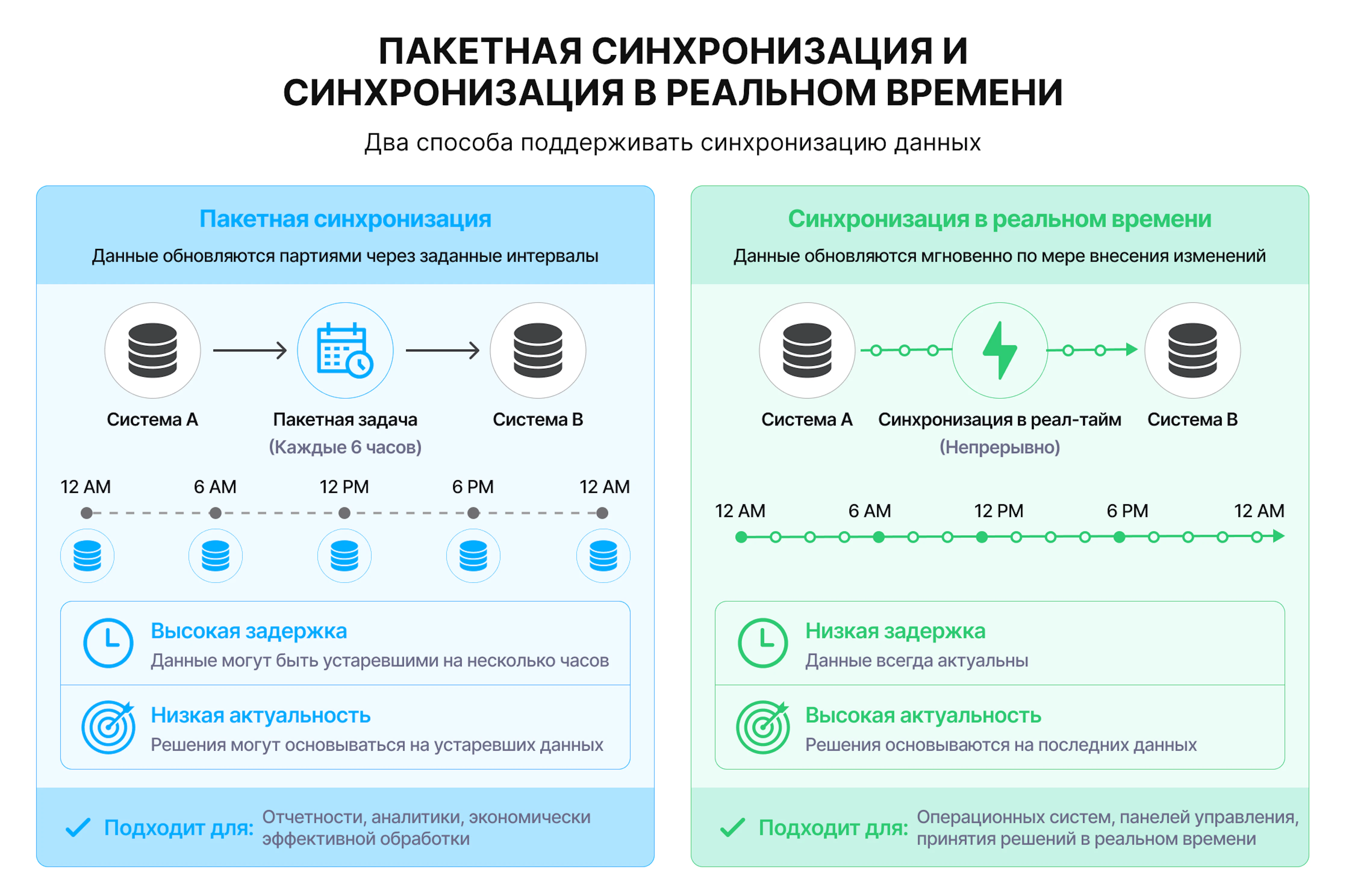
Выбор метода зависит от того, как часто меняются данные, как быстро решения должны отражать эти изменения и каковы технические ограничения задействованных систем.
Преимущества синхронизации данных
Когда синхронизация работает хорошо, она становится невидимой: такая инфраструктура замечается только при сбое. Ее преимущества наиболее очевидны в средах, где несколько систем должны отражать одну операционную реальность.
- Согласованность принятия решений. Когда инструменты каждого стейкхолдера отражают одно и то же текущее состояние, решения основываются на одних и тех же фактах, а не на расходящейся версии событий каждой команды.
- Снижение ручной нагрузки. Без синхронизации команды компенсируют это ручным копированием данных между системами. Автоматизация устраняет эту работу.
- Повышение надежности данных. Ручная передача данных вносит ошибки транскрипции и конфликты версий. Автоматизированная синхронизация более последовательна и поддается аудиту в масштабе.
- Основа для ИИ и аналитики. Дашборды, ИИ-агенты и инструменты отчетности настолько точны, насколько точны данные, из которых они черпают информацию. Надежная синхронизация делает аналитические результаты заслуживающими доверия.
Практическая ценность синхронизации данных в том, что она превращает отдельные записи в инструментах в общую, надежную операционную картину — из которой вся организация может исходить без накладных расходов на согласование.
Типичные вызовы синхронизации данных
Несмотря на важность, синхронизация данных — одна из наиболее часто недооцениваемых инфраструктурных проблем в многоинструментных средах. Вызовы носят структурный характер и накапливаются со временем.
- Несовпадение схем и форматов. Разные инструменты представляют одни и те же концепции по-разному: "completed" в одной системе может не соответствовать "done" в другой. Разрешение несоответствий требует логики преобразования, которую нужно поддерживать по мере эволюции инструментов.
- Разрешение конфликтов. При двунаправленной синхронизации две системы могут одновременно обновить одну и ту же запись. Без явных правил одно обновление молча перезаписывает другое, создавая потерю данных, которую сложно обнаружить.
- Задержка и актуальность. Пакетная синхронизация вносит задержку. Статус проекта восьмичасовой давности нередко операционно бесполезен в быстро меняющихся средах поставки.
- Частичные сбои и молчаливые ошибки. Задание синхронизации, которое завершается частично (обрабатывает 90% записей корректно и молча отбрасывает остальные), хуже полного сбоя — полученные данные выглядят верными, оставаясь незаметно неправильными.
- Нестабильность API. Синхронизация между SaaS-инструментами зависит от стабильности API. Задокументированные изменения на стороне провайдера могут молча нарушить синхронизацию и потребовать срочного исправления.
Как Enji обеспечивает надежную синхронизацию данных между инструментами?
Возможности аналитики поставки Enji зависят от непрерывных, точных данных из инструментов инженерных команд. Надежность синхронизации — это фундаментальное архитектурное требование, определяющее то, как Enji подключается к внешним системам. Эта надежность обеспечивается несколькими проектными решениями.
- Нативные API-интеграции вместо промежуточных форматов. Enji напрямую подключается к трекерам задач, репозиториям кода, корпоративным мессенджерам и календарям. Система получает данные из первоисточника, а не через экспорты или сторонние прослойки. Чем меньше промежуточных этапов, тем ниже риск ошибок при передаче и преобразовании данных.
- Отслеживание идентичности записей при реорганизации системы. Когда проекты реорганизуются, а задачи перемещаются между досками, Enji отслеживает их идентичность на протяжении всех изменений: обновляет ключи и переносит связанные записи вместо того, чтобы создавать дубликаты или терять историю. Это помогает избежать дублирования записей о времени и появления несвязанных записей, которые искажают данные о затратах и загрузке команды.
- Автоматическое покрытие ворклогами при пробелах синхронизации. Ручной учет времени часто бывает неполным, и это создает пробелы в данных между связанными системами. Зеленые ворклоги автоматически формирует записи о затраченном времени на основе фактических паттернов активности. Благодаря этому финансовые показатели и данные о загрузке в Enji остаются полными даже тогда, когда в исходных системах есть пропуски.
- Выявление ошибок вместо молчаливых сбоев. Ошибки синхронизации в Enji фиксируются и показываются как аномалии, с которыми можно работать. Если появляется расхождение, например между учтенными и выставленными в счете часами, оно становится видимым в функции Маржинальность проектов, а не остается скрытым искажением внутри отчетов.
Так как Enji синхронизирует данные между инструментами, ответы PM Агента о стоимости, рисках или загрузке команды совпадают с тем, что вы увидели бы при ручной проверке исходных систем. В этом разница между краткой ИИ-сводкой, которую можно просто просмотреть, и сводкой, на основе которой можно уверенно принимать решения.
Главное по теме
- Синхронизация данных поддерживает согласованность между несколькими системами. Благодаря этому каждый инструмент отражает одно и то же актуальное состояние, а данные не начинают расходиться по разным источникам.
- Подходы к синхронизации различаются по нескольким параметрам: по времени выполнения — пакетная или в реальном времени; по направлению — односторонняя или двусторонняя; по объему — полная или инкрементальная. Выбор подхода зависит от того, как часто меняются данные и насколько быстро решения должны учитывать эти изменения.
- Главные преимущества синхронизации данных: согласованность решений, меньше ручной работы, более надежные данные и прочная основа для аналитики и результатов, которые генерирует ИИ.
- Самые частые сложности: несовпадение структур данных, конфликты при двусторонней синхронизации, задержки при пакетной обработке, частичные сбои, из-за которых данные становятся незаметно некорректными, а также нестабильность API внешних провайдеров.
- Надежность синхронизации важна, потому что ошибки распространяются по цепочке. Один ненадежный источник ухудшает качество всех последующих данных, включая ИИ-аналитика, которые могут выглядеть уверенно, даже если основаны на ошибочной информации.
- Enji обеспечивает надежную синхронизацию за счет прямых API-интеграций, устойчивого отслеживания идентичности задач при реорганизации проектов, автоматического формирования записей о затраченном времени при пробелах в данных и видимого отображения ошибок вместо скрытых сбоев.

Последнее обновление: июль 2026 г.