Your AI writes the code. Who reviews it? Meet Enji Guard.

Keep telecom releases on track
across vendors and systems

When OSS/BSS, billing, customer apps, and network platforms are delivered by internal teams, system integrators,
and external vendors, one delayed dependency can put an entire release window at risk.
Enji shows what is blocked, who is waiting, and where to act before delays cascade.

Why do telecom release plans break?

70+ teams. One release window

70+ teams. One release window

Network, platform, billing, and customer-app teams, along with system integrators and vendors, all need to deliver within the same release train.

One stalled dependency blocks the chain

One stalled dependency blocks the chain

A delayed billing API can hold up a customer-app feature and the teams waiting on it. The risk is not one late ticket; it is a release window that starts to slip.

The real risk appears after the status update

The real risk appears after the status update

Critical signals sit across Jira, Git, Slack, and vendor reports. By the time they are consolidated, the blocker has already affected the delivery plan.

Where does complexity kill your timelines?

When no one owns the handoff

▪️ A feature moves from network to platform to billing, then to a vendor.

▪️ Each team delivers its part, but no one sees the full chain of ownership.

▪️ Work stalls between teams while the release plan still looks on track.

When systems move at different speeds

▪️ OSS/BSS, customer apps, network systems, and partner integrations change at different speeds.

▪️ Each team delivers its part, but no one sees the full chain of ownership.

▪️ A local change creates downstream work for teams outside the original plan.

When merged divisions still deliver separately

▪️ Network, platform, and digital-product teams keep separate tools, processes, and priorities.

▪️ Duplicate work and conflicting dependencies stay hidden across organisational boundaries.

▪️ A shared release requires coordination that the old operating model does not provide.

How Enji does it?

Fix dependencies before they derail

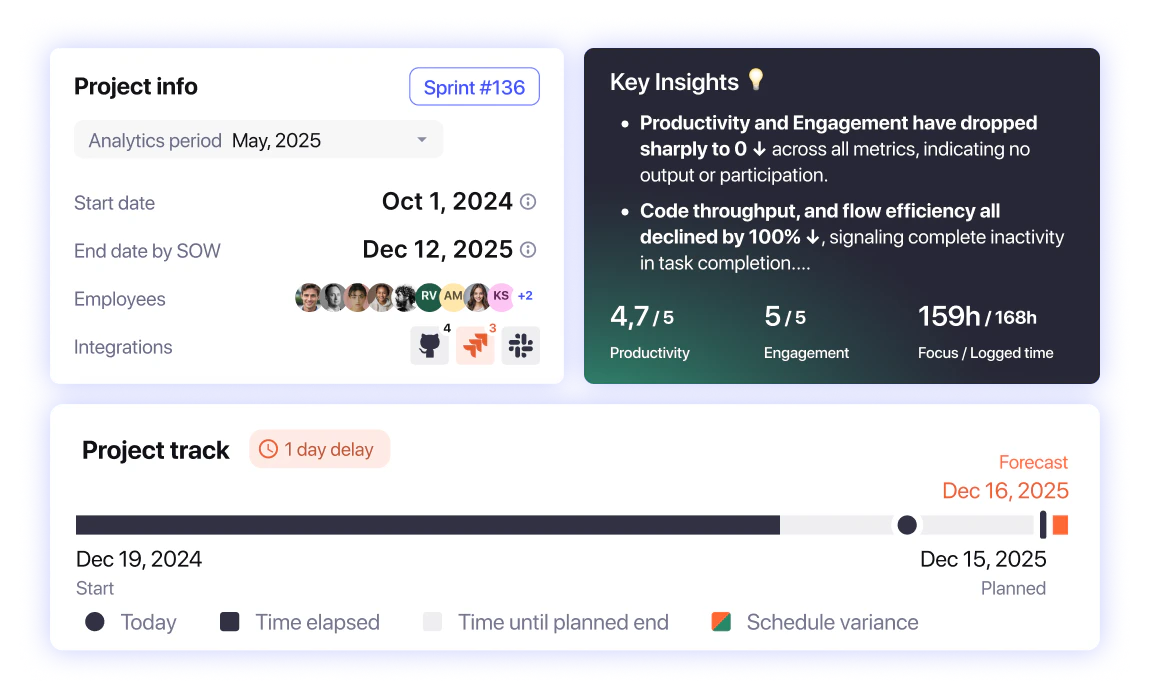
Track every technical dependency across your architecture in real time. Enji maps team interactions, identifies blockers automatically, and flags risks before they cascade into delays.

  • Cross-team dependency mapping shows who's waiting on whom
  • Automated alerts when blockers threaten critical paths
  • Visual timeline of how team delays impact downstream work
  • Monitor external development teams with the same visibility as internal staff
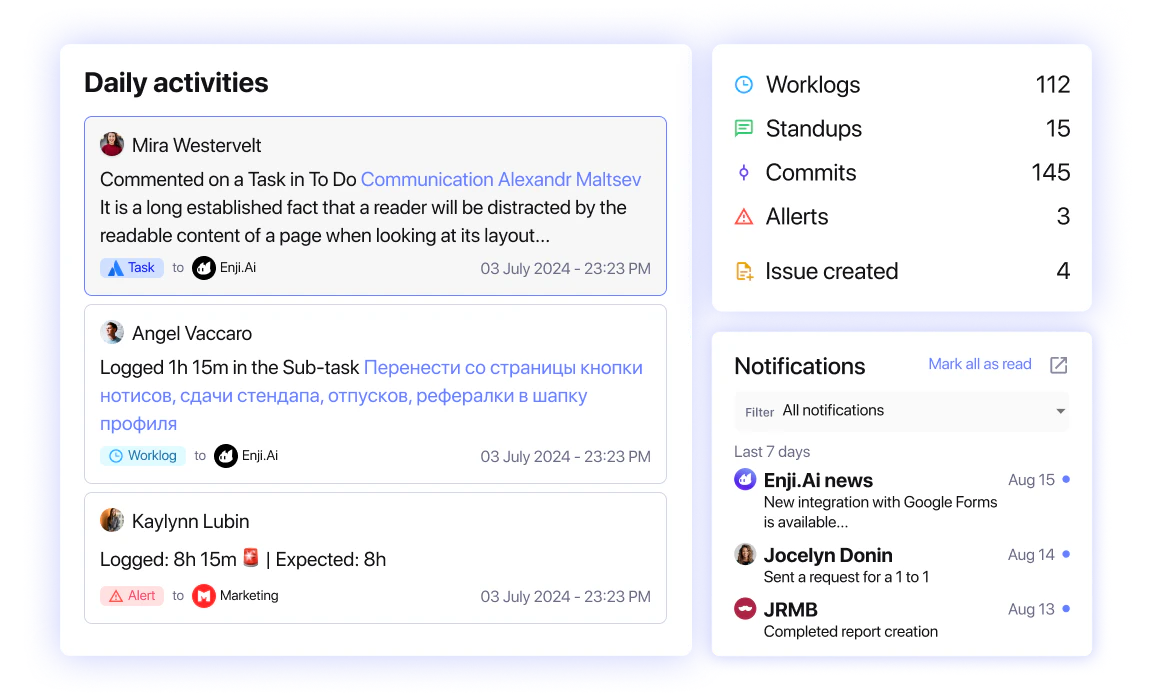
Dashboard showing daily activity feed with worklog, standup, commit, and alert counts per team.

Know exactly when features will ship

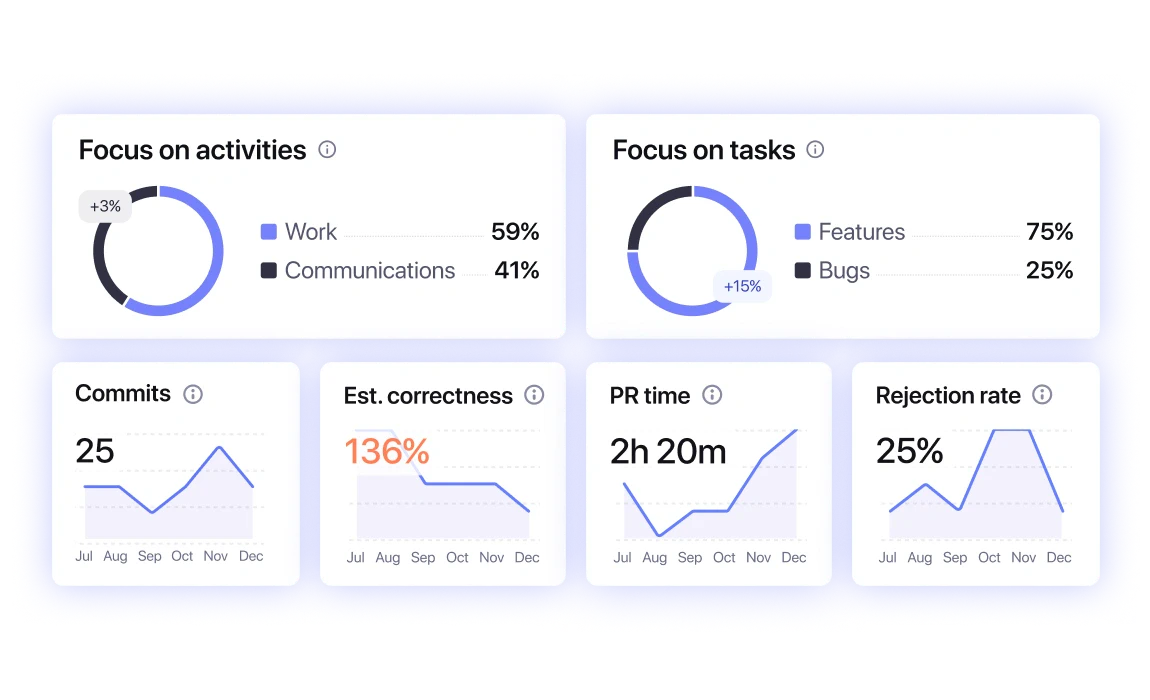
Eliminate guesswork from release planning. Enji analyzes team velocity, dependency chains, and workload to predict realistic delivery dates, not wishful thinking.

  • Release forecasts based on actual data, not estimates
  • Scenario planning shows impact of scope changes
  • Automated sprint health reports keep stakeholders informed
  • AI-powered summaries delivered regularly to your communication tools, seeing everything at a glance
Know exactly when features will ship

Control workload and prevent burnout

See which teams are drowning and which have capacity before quality suffers. Enji tracks developer activity patterns to flag overwork early.

  • Workload distribution across all engineering teams
  • AI-powered early warning system for burnout indicators
  • Capacity planning based on real throughput data
  • Perfect for merged organizations: unify visibility across formerly separate teams
Control workload and prevent burnout

Understand the true cost of every feature

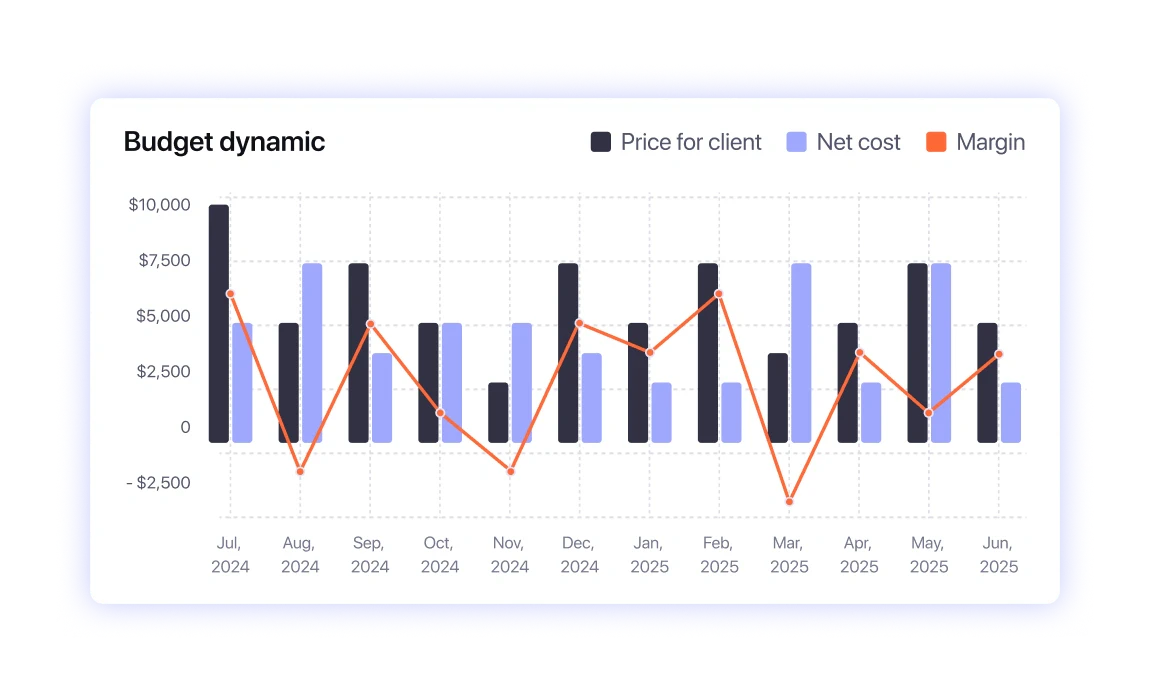
Make budget decisions with complete financial transparency. Enji calculates the actual time and cost invested in each feature, module, and release.

  • Real-time budget tracking tied to feature development
  • Cost per feature based on team hours and rates
  • Historical cost data for better future estimates
  • Track costs across internal, external, and contractor teams in one place
Understand the true cost of every feature

Built for large, complex telecom operations

Merged divisions

Merged divisions

Bring teams, tools, and processes into one clear view after a merger, even when they come from different organizations.

External teams

External teams

Track offshore contractors, nearshore partners, and third-party vendors with the same visibility you have for internal teams.

Multiple projects

Multiple projects

See status, risks, and priorities across a large portfolio of projects in one place.

Automated reporting

Automated reporting

Send daily, weekly, or custom reports automatically to email or Slack, without compiling them by hand.

Make complex telecom releases more predictable

See how actual velocity, dependency chains, and capacity data create a clearer basis for release plans, scope decisions, and stakeholder updates.

30 min · Google Meet

Choose a time

UTC
Loading available times…