ИИ: Ключевые термины
Что такое данные, готовые для ии
Что такое данные, готовые для ИИ?
Данные, готовые для ИИ (англ. AI-ready data) — это данные, структурированные, очищенные и организованные таким образом, чтобы ИИ-системы могли надежно их обрабатывать и формировать точные, практически применимые результаты.
Это различие важно, потому что ИИ-системы усиливают все, что содержится в данных, которые они получают. Хорошо структурированные, полные и последовательно отформатированные данные дают полезные результаты. Фрагментированные, дублирующиеся или непоследовательно размеченные данные дают результаты, которые выглядят правдоподобно, но которым нельзя доверять при принятии реальных решений, в том числе на уровне C-level.
Для инженерных и команд доставки, где ИИ-инструменты все чаще используются для получения аналитики о проекте, прогнозирования рисков и формирования отчетов, качество базовых данных напрямую определяет ценность слоя ИИ над ними.
Что делает данные готовыми для ИИ? Ключевые характеристики
Данные, готовые для ИИ, обладают согласованным набором характеристик вне зависимости от области, из которой они поступают. Для данных поставки и разработки именно эти свойства определяют, способна ли платформа генерировать надежные инсайты или лишь создает информационный шум.
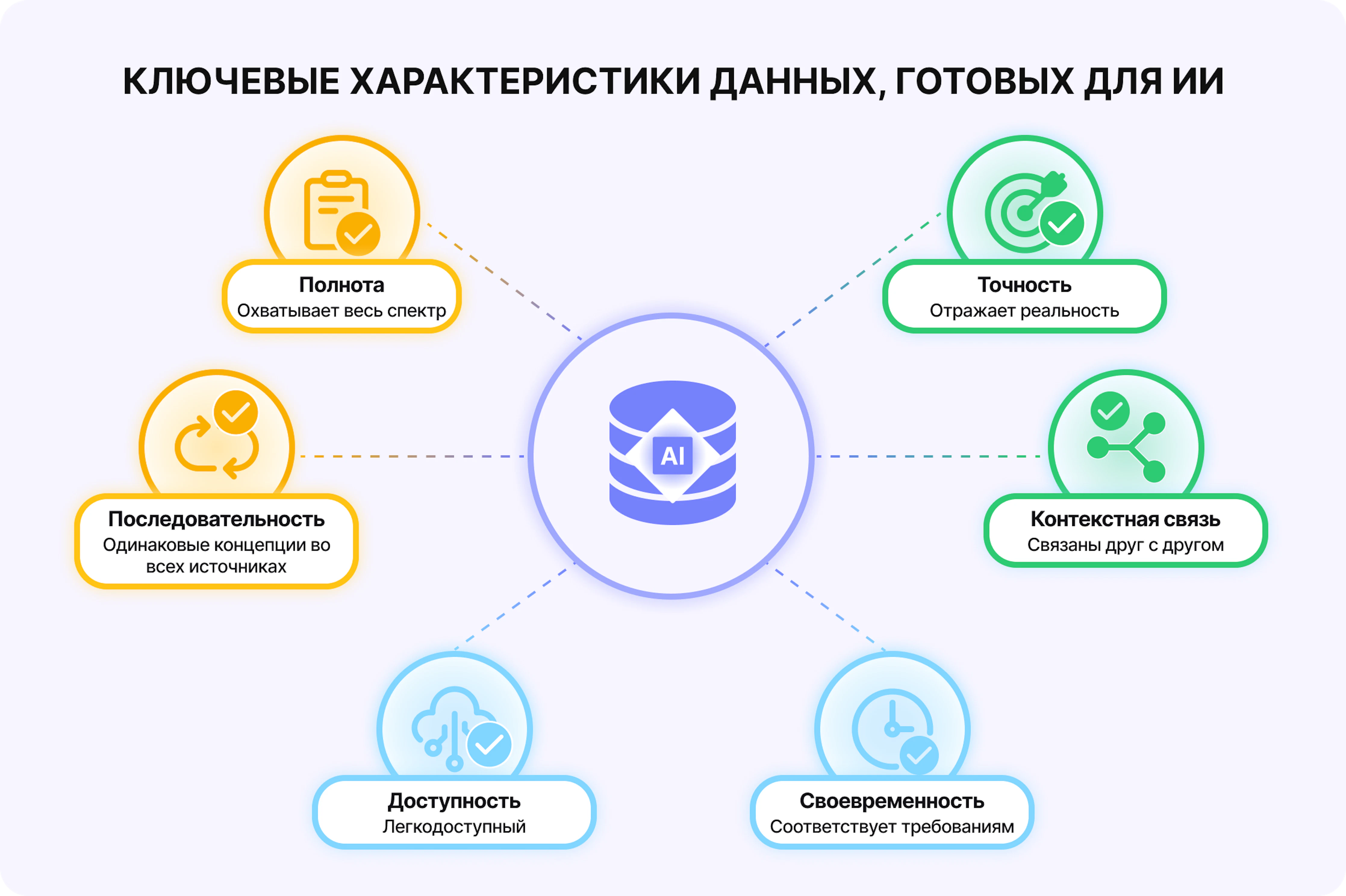
- Полнота
Данные охватывают весь объем того, что они призваны представлять. Частичные записи, отсутствующие временные метки или пробелы в покрытии ворклогов создают слепые зоны, искажающие любой анализ, построенный на их основе. - Согласованность
Одни и те же понятия представлены одинаково в разных источниках. Статус задачи "Done" в Jira и "Closed" в таблице описывают одно и то же состояние, но создают неоднозначность для любой системы, пытающейся их агрегировать. - Точность
Данные отражают реальность. Завышенные оценки, откорректированные вручную ворклоги или неверно категоризированные тикеты подрывают целостность каждой производной метрики. - Актуальность
Данные свежие. Результаты ИИ, основанные на данных недельной давности, ведут к решениям, принятым на основе устаревшей реальности, что особенно проблематично в быстро меняющихся средах поставки. - Доступность
Данные доступны системам, которым они нужны без ручного экспорта, конвертации форматов или ограничений доступа, вносящих задержки и ошибки. - Контекстная связанность
Данные соединены между собой значимым образом. Коммит привязан к тикету, тикет — к функции, функция — к бюджетной статье: этот граф связей и позволяет ИИ отвечать на вопросы, охватывающие несколько инструментов и типов данных.
Данные, готовые для ИИ, — это полные, согласованные, точные, актуальные, доступные и контекстно связанные данные. Любой пробел в этих свойствах ограничивает то, что ИИ способен из них извлечь.
Как сделать данные готовыми для ИИ и почему это важно?
Подготовка данных для ИИ — это по сути задача управления данными: она требует осознанных решений о том, как данные собираются, структурируются и поддерживаются со временем, а не разовой очистки перед развертыванием ИИ-инструмента.
Отправная точка — выработка согласованных соглашений о вводе данных во всех инструментах. Это означает договоренность о единых соглашениях по именованию, статусных метках и схемах категоризации, применяемых повсеместно, чтобы данные из разных инструментов можно было агрегировать без ручного согласования. На практике именно этот шаг большинство команд пропускает — он требует межфункционального согласования, а не технического решения. И именно он больше всего определяет, можно ли доверять результатам ИИ.
Дальнейший процесс включает следующее.
- Аудит качества существующих данных по всем подключенным инструментам: выявление пробелов в покрытии, несоответствий в разметке и полей, которые систематически не заполнены или используются не по назначению.
- Определение владельцев данных, чтобы было ясно, кто отвечает за каждый тип данных, а проблемы качества имели путь к решению, а не оставались нерешенными.
- Автоматизация сбора данных где это возможно — снижение зависимости от ручного ввода, который привносит как задержки, так и несоответствия. Автоматические ворклоги, привязка коммитов к тикетам и интеграция с календарем устраняют целые категории рисков для качества данных.
- Установка правил валидации, которые помечают аномалии в момент ввода, а не обнаруживают их месяцы спустя, когда результат ИИ выглядит странно.
- Непрерывное поддержание данных — не рассматривать готовность для ИИ как конечную точку. Качество данных деградирует со временем по мере изменения команд, перенастройки инструментов и эволюции процессов.
Бизнес-обоснование прямолинейно: ИИ-инструменты, применяемые к данным низкого качества, не дают сбой явно — они дают сбой тихо, выдавая результаты, которые выглядят правдоподобно, но отражают искаженную версию реальности. Цена этого проявляется в решениях, принятых на основе неверной информации, а не в видимых системных ошибках. Грамотное управление данными, готовыми для ИИ, — это то, что отделяет ИИ, ускоряющий принятие решений, от ИИ, создающего более изощренный способ ошибаться.
Что такое платформа данных, готовых для ИИ?
Платформа данных, готовых для ИИ, — это система, предназначенная для сбора, интеграции и поддержания данных из нескольких источников в форме, которую ИИ-инструменты могут использовать напрямую, без ручной подготовки или промежуточных этапов преобразования.
Для инженерных и команд доставки это означает платформу, которая нативно подключается к уже используемым инструментам (таск-трекерам, репозиториям кода, коммуникационным платформам и финансовым системам) и агрегирует их результаты в единый структурированный слой данных. Платформа автоматически обеспечивает согласованность и связанность, поддерживая отношения между коммитами, тикетами, функциями, бюджетами и активностью команды, которые нужны ИИ-моделям для ответа на сложные вопросы.
Ключевое отличие от обычного хранилища данных — операционная интеграция. Хранилище хранит исторические данные для ретроспективного анализа; платформа, готовая для ИИ, поддерживает живые актуальные данные, питающие активные ИИ-процессы. Она также обеспечивает отслеживание источников и возможность аудита — фиксирует, откуда пришла каждая точка данных и как она была преобразована, — так что результатам можно доверять, а не принимать их на веру.
Как Enji помогает достичь готовности данных поставки для ИИ?
Enji построен на принципе, что аналитика поставки настолько хороша, насколько хороши лежащие в ее основе данные. Платформа решает задачу готовности данных для ИИ на уровне инфраструктуры, чтобы PM Агент, технология Project Narrative и Маржинальность проектов выдавали результаты, на которые руководители действительно могут опираться.
Фундамент — нативная интеграция с Jira, Azure DevOps, GitHub и другими инструментами: данные извлекаются автоматически, а не зависят от ручного экспорта. Контекстная связанность обеспечивается автоматически: коммиты привязываются к тикетам, тикеты — к функциям, функции — к бюджетным статьям, все — к участникам команды и временным периодам. Именно это позволяет PM Агенту отвечать на вопросы, охватывающие весь контекст поставки, а не данные одного инструмента.
Для команд без устоявшихся практик учета рабочих часов, функция "Зеленые воклоги" автоматически генерирует данные ворклогов на основе реальных паттернов активности, заполняя пробелы в покрытии, которые иначе создавали бы слепые зоны. Маржинальность проектов поддерживает финансовый слой в режиме реального времени, непрерывно связывая затраты на труд, счета подрядчиков и распределение бюджета с данными задач и функций.
В результате формируется слой аналитики поставки, построенный на полных, актуальных, контекстно связанных данных — так что результаты ИИ надежно укоренены в реальности, а не просто выглядят правдоподобно.
Главное по теме
- Данные, готовые для ИИ, — это полные, согласованные, точные, актуальные, доступные и контекстно связанные данные. Любой пробел ограничивает надежность каждого ИИ-результата, построенного на их основе.
- Эти свойства наиболее важны в контексте поставки и разработки, где результаты ИИ определяют реальные решения о сроках, бюджетах и ресурсах.
- Подготовка данных для ИИ — непрерывная практика, а не разовая очистка: она требует согласованных соглашений, определенного владения, автоматизированного сбора и постоянной валидации.
- Платформа данных, готовых для ИИ, интегрирует живые данные из нескольких источников в единый слой, к которому ИИ-инструменты могут обращаться напрямую, без ручной подготовки.
- Enji поддерживает готовность данных поставки для ИИ через нативные интеграции, автоматическую контекстную связанность, генерацию ворклогов и поддержание финансовых данных в реальном времени.
- Аналитика поставки настолько надежна, насколько надежны лежащие в ее основе данные; инфраструктура Enji обеспечивает надежность базовых данных, чтобы ИИ-результаты были прочно укоренены в реальности.


Последнее обновление: июль 2026 г.